
Wednesday, June 28, 2023
Site Navigation


Not Found
The requested URL /collections/issues/include_collection_navigation.shtml was not found on this server.

Links & Resources
How you can helpHow has Hurricane Katrina affected you, your family or your business?
Katrina in photos (Flash)
New Orleans Times-Picayune
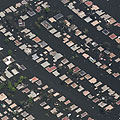
Photo: Dave Einsel/Getty Images
From Minnesota Public Radio
Students from the University of St. Thomas in St. Paul went to New Orleans to clean up decaying houses still lining neighborhood streets, more than 18 months after Hurricane Katrina flooded the area. They found rows of empty homes and a community trying to get back on its feet.
(03/28/2007)
After Hurricane Katrina in 2005, University of Minnesota physician Jon Hallberg went to Louisiana to relieve over-stretched clinics in the area. He ended up treating the health care "disaster" that existed long before the hurricanes hit. He recently went back to see what's changed.
(10/11/2006)
Minnesota welcomed people from the Gulf Coast after Hurricane Katrina struck last year. Many of those people have returned to their hometowns, but we talk to one couple who decided to stay in the Twin Cities, and is putting down roots in Minnesota.
(08/31/2006)
In the year since Hurricane Katrina, America's attention has been focused on New Orleans -- on how devastating the flooding was there and how slowly the city is picking up the pieces. But 90 miles east, in the city of Biloxi, Mississippi, a dramatically different story is unfolding.
(Midday, 08/29/2006)
Mark Folse wasn't in New Orleans when Hurricane Katrina hit. He was living in Fargo, N.D. But the Louisana native was so moved by the disaster that he picked up his family and moved 1,500 miles south to help with the rebuilding effort.
(Midday, 08/29/2006)
After Hurricane Katrina ravaged the Gulf Coast one year ago, more than 800 families from the region ended up taking shelter in the Twin Cities.
(08/29/2006)
As President Bush gets a look at reconstruction efforts in New Orleans, critics are saying the Army Corps of Engineers is taking shortcuts in its rebuilding of the city's levees.
(Midmorning, 03/09/2006)
One of the biggest stories of 2005 was undoubtedly Hurricane Katrina. And the story continues as the storm-ravaged Gulf Coast rebuilds itself.
( 12/21/2005)
James Lee Witt, who was director of the Federal Emergency Management Agency during the Clinton Administration, says that if he was in charge during Hurricane Katrina, he would have handled things differently. Speaking at the City Club Forum in Cleveland Friday, Witt also said that FEMA needs to be removed from the Department of Homeland Security.
( 12/19/2005)
The aftermath of Hurricane Katrina laid bare the racial tensions that always seem to lie just below the surface. Commentator Jonathan Odell has been thinking about race relations, and just how little the races actually relate. Odell, a native of Mississippi, lives in Minneapolis. He is the author of "The View from Delphi," which explores racial tensions in the South before the civil rights movement.
(10/13/2005)
From Marketplace
Hurricane Katrina coverage from MarketplaceFrom American RadioWorks
Nature's RevengeAmerican RadioWorks' 2002 documentary explored hurricane risk in New Orleans and preparations to manage that risk. Now in 2005, is Katrina fulfilling those predictions? (09/2002)
From NPR News
More from NPRNot Found
The requested URL /standard/include/mpr005/global_module_shortcuts.shtml was not found on this server.
Services
- HD Radio
- newiPhone app / Mobile
- E-mail newsletters
- RSS feeds
- Podcasts
- Submit your photos
- Videos
- Weather
- Most e-mailed stories
Tools
Not Found
The requested URL /standard/include/mpr005/global_ad_middle.shtml was not found on this server.
|
|