In the Spotlight

Tools
News & Features
Rural School Keeps Local History Alive
by Stephanie Hemphill
May 18, 2000
Click for audio RealAudio 3.0


At North Shore Elementary School, just north of Duluth, May 19th is a special day. The whole community will gather to celebrate their history. They're publishing a book, they've created a new curriculum for the school, and they are collecting oral histories with community elders.

Finland's Living History
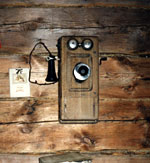
Take our virtual tourof Esther Kyromaki's homestead cabin and learn how Finnish immigrants lived.
 
RICH SILL,, the father of two children at North Shore Elementary School and the main impetus behind the school's community history project, rummages in a herring box filled with fishing equipment.

Fishing was a major part of the economy along the North Shore of Lake Superior from the moment the area was opened to white settlement in the 1850s. For 40 years, water was the only means of transportation and the inland forests remained wild. Finally in the 1890s, a few hardy Finns, Norwegians and Swedes hiked into the woods and claimed homestead land.

The children of some of those pioneers still live in the area and, at Sill's urging, they are telling their stories to their great-grandchildren and other youngsters at North Shore Elementary School.

"The idea is to give the children a hands-on experience, and then we'll have a fisherman himself come in, hang nets, and talk about different size meshes for trout, whitefish, herring," says Sill. "It'll give students a chance to find out firsthand what it was like to be a commercial fisherman here on the North Shore."

The herring box is one of several "history trunks" that Sill and others are putting together to bring local history alive for youngsters. Others will offer artifacts of Ojibway life, homesteading, logging, and other aspects of local history. The book Roots in the Past, Seeds for the Future contains personal histories of early settlers, based on their own writings and on interviews conducted by school children.

One of the best resources in this project is Helen Hendrickson. Every spring she and her friends take students to interesting places in the neighborhood. She tells a very personal story about the iron bridges that span the North Shore rivers plunging to the Lake. As a teenager during World War II, she watched as trains rumbled by, carrying iron ore for arms factories in the East.

Related Story
At a time when anti-immigrant sentiment is building in this country, Americans of European descent sometimes forget how poor their own immigrant ancestors were; how foreign and threatening they once seemed to the rest of America. A glance at the history books shows how hard this country's immigrants had to fight to get into the mainstream.

Minnesota Public Radio's Mary Losure and Dan Olson produced a feature about the Finns who came to northern Minnesota at the turn of the century. The voices of early immigrants are from taped interviews preserved in historical archives. The story is called Finland Was A Poor Country."
 
Every one of these bridges had a man who was a guard, a man from the neighborhood, he would sit here for eight hours and then someone else would come," she says. "They were armed at all times, and when we played around the river we always made a point of going to the edge of the river, waving to the guard, making sure he saw us because we didn't want to be mistaken for the enemy."

Today, the bus takes the kids to a reconstructed log cabin where Esther Kyromaki shows the children how Finnish immigrants lived, using everything from oil lamps to spinning wheels (see slideshow above).

Some of the history is less tangible, because buildings have been lost. Rich Sill says before the days of electricity and radio, people here loved to dance. One dance hall was called Danslava. "It was an area that had no walls, no roof; it was just an open-air platform, and they'd hold dances there from Memorial Day to Labor Day every summer," he says. "The children would crawl under the platform and fall asleep waiting for their parents to finish dancing and it was a dance held under the stars."

Dances are still held at North Shore Elementary School, a center of community life. Like many small rural schools, North Shore is continually threatened with possible closure. Sill hopes the intense community interest in the history project will help the school's chances of survival.

At the celebration, the history book will go on sale, a slide show will honor community elders, and ethnic music will mix with songs written by North Shore students.