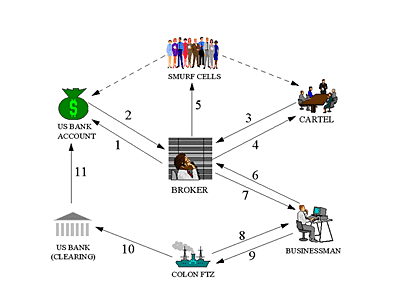
1. Black market money brokers in Colombia direct Colombians visiting or residing in the U.S. to open personal cheque accounts at U.S. banks, and deposit minimal amounts.
2. Cheques on these accounts are signed in blank by the customers and given to the brokers who pay them US$200-400 for each account. The brokers keep a stock of signed cheques on these "shell" U.S. accounts.
3. Colombian drug cartels sell their stockpiled cash at a parallel or "discounted" exchange rate to the Colombian money brokers in exchange for pesos which are paid in Columbia.
4. The brokers purchase the dollars at the discounted rate and the cartels lose a percentage of their profits but avoid the risks of laundering their own drug money.
5. Once the drug money is purchased, the broker directs his network smurfs to pick up the cash, and structure deposits into the various "shell" cheque accounts.
6. The broker then offers to sell cheques drawn on these accounts to legitimate Colombian businessmen (who need U.S. dollars to conduct international trade) at a "parallel" exchange rate.
7. The broker fills in the dollar amount on the signed cheque, but leaves the name of the payee blank. The broker also stamps his symbol on the cheque as a means to guarantee his payment on the cheque in the event there are ever insufficient funds in the "shell" checking account.
8. The businessman can then fill in the payees name when he uses the signed cheque as a U.S. dollar instrument to purchase goods (perfume, gold, etc.) in international markets such as Free Trade Zones.
9. The businessman then ships or smuggles the goods into Colombia.
10. The Free Trade Zone distributor, who is often a knowing participant in the black market exchange process, forwards the cheque to his U.S. bank account or it may even clear through his local bank account.
11. Once cleared, the cheque account is debited, and the distributor's U.S. account is credited.
(Source: U.S. Treasury Department)
Close Window
© Minnesota Public Radio