





 |
|

| RealAudio |
A recent report on the performance of Minneapolis public schools showed African Americans students are suspended three times as often as white students. School and community leaders say the rate is unacceptably high and points to cultural barriers in the classroom. They also say suspension is an ineffective punishment because students who often need extra academic help are kept out of school.
 |
|
|
|
||
|
||
Black students make up just 44 percent of the district's total enrollment, yet they account for 74 percent of all suspensions. Last year, Minneapolis school principals suspended a total of 9,217. Many were sent home several times. The 2002 "Measuring Up" report shows a consistent racial imbalance the past three years.
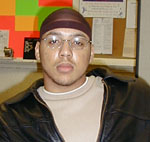
Julius Cochran, a senior at Edison High School, estimates he's been suspended 50 times since elementary school.
"I never liked to be quiet in class," Cochran said. "I liked to clown around with my homies and stuff. I never was one to get into a fight or anything. I always got suspended because I disrespected the teacher and probably got caught skipping or something."
Cochran turned around his attitude toward school two years ago by joining ACE, an afterschool intervention program currently helping 240 African American students improve their behavior and achievement. His grades are up and he's now talking about college. Cochran also serves as an ACE mentor to junior high school boys who are struggling like he did.
| |
|
|
|
||
|
||
"I didn't really have a problem with learning," he said. "It's just that once I didn't get something I never really asked for help. I just said well forget it. If I can't get it you know then what's the point in doing it. So, I just basically clowned around just to put my mind on something else other than school."
Torry Williams is a sophomore at Minnesota State University-Mankato who frequently returns home to help out in the ACE program. The Patrick Henry High School graduate says he learned his lesson with suspensions in junior high, but he says too few troublemakers view suspension as a punishment.
"That's a vacation to a lot of people," Williams said. "It's like okay, I don't want to be here, I'll go get suspended. So, I think schools need to work harder on keeping students in there, even like the worst their behavior like. Because to tell you the truth I think bad behavior would stop if you make them stay."
School suspensions in Minneapolis range from one to 10 days. Possession of weapons drugs or alcohol, assaults and sexual harassment bring mandatory suspensions. They're also the rarest cases. The largest reason for suspensions is fighting, with the majority of cases in sixth through eighth grades.
Emmett Carson, executive director of the Minneapolis Foundation and a coauthor of the "Measuring Up" report, says he's troubled by the most common reasons, as well as the racial disproportions.
| |
|
|
|
||
|
||
"It's not the fighting, the weapons, the drugs, where no one would question that those students pose a threat or risk to the school," Carson said. "It's being disruptive, being uncooperative, being defiant. Those are cultural, interpersonal relationships issues that have to do with your ability to cope. Both the students' ability to cope and the teachers' ability to cope."
Carson says the district's largely white teaching force needs more training and disciplinary options. He says students must also come to school ready to learn and parents must be more engaged in their children's education.
"I understand it's complicated," he said. "I understand it's difficult. But the reality is our community doesn't benefit if 75 percent of the suspensions are African Americans. Something is desperately wrong."
School district officials agree and are looking at possible solutions. Craig Vana, director for special initiatives, says the district is examining its list of possible suspension offenses and revising outdated items. He says "persistent lack of cooperation" now makes up 15 percent of all suspensions.
"What we've found is when you go out and ask teachers what that's about, or you ask principals what is means to suspend someone for persistent lack of cooperation, you can get several answers," Vana said. "And so because it's open to so much interpretation we feel that we're going to have to do something different with that particular offense."
Vana says the teachers who've grown dependent on suspensions must find new ways to handle classroom discipline. He says the district cannot improve overall student achievement unless all students are in school and learning.
More Information © 2026 | Home : Terms of Use : Your Privacy Rights