






 |
|
|
Photos
Resources
Your Voice
|

 |
| (MPR photo/Dan Olson) |
|
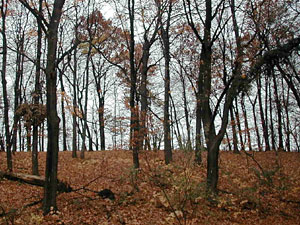
Wayzata, Minn. — Four hundred years ago a wide swath of forest covered much of central and southeastern Minnesota. Towering maple, oak, elm and basswood created a natural canopy over what is now the Twin Cities. It covered 2000 square miles in Minnesota. Biologists call the forest the Big Woods. State officials say less than a tenth of 1 percent, about 500 acres remain. White settlers felled most of the trees for firewood and farming. The remnants are in scattered parcels like the 22 acre piece in Wayzata.
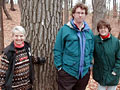
Merrily Borg Babcock remembers growing up in Wayzata on forested land before homes were built. She's an organizer of the effort to have the city buy the Big Woods remnant and ban development on it.
"When I first walked through here and I saw the wildflowers in the spring, I was just in awe, I thought, 'Oh my gosh, I was back to when I was a little kid,' so I mean it's quite an amazing woods here," Babcock said.
 | | ||
| |||
|  Backers of saving the Wayzata Big Woods remnant Backers of saving the Wayzata Big Woods remnant | | |
| |||
An ankle deep carpet of red and yellow leaves covers the ground. Visitors are dwarfed by trees more 100 years old. Traffic noise from the freeway and nearby parking lots is a reminder of the development pressure that surrounds the property.
Babcock and others have asked the Trust for Public Land for help in preserving the parcel. Should Wayzata voters approve, the city will contribute $3 million, and private donors will add nearly $2 million to buy most of the property.
Trust for Public Land spokesman Bob McGillivray says the deal includes a conservation easement from the state. The easement, he says, means the parcel won't be disturbed.
"A conservation easement runs with the land and stays with the land in perpetuity, or forever," McGillivray says.
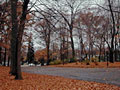
However, even with voter approval a portion of the Wayzata Big Woods remnant will be used. The preservationists say an alcoholism treatment center is interested in buying existing buildings on seven acres once used as a religious convent.
 | | ||
| |||
| Buildings on Wayzata Big Woods remnant once housed convent | | |
| |||
The cost to Wayzata property owners to save the trees would be about $80 a year on a $250,000 home; about $160 dollars for owners of a half million dollar dwelling.
A no vote leaves the door open for development on the Big Woods parcel.
Wayzata city council member Bob Ambrose says the most recent development proposal is for 148 units of housing. Ambrose supports a yes vote that bans development. He says building on the land does not come without expense.
"Even that proposal would have required tax abatement bonds, just a different kind of bonds to provide some of the infrastructure for the development and the costs of increased traffic on Wayzata boulevard and that sort of thing," Ambrose said.
Wayzata mayor Barry Petit, out of town and unavailable for comment, supports developing the parcel. He's been reported as saying preservation will shut the door on building much needed housing in the city.
A sampling of Wayzata residents at a downtown coffee shop shows support for preserving the Big Woods remnant. Brian Schell says he's not swayed by the argument that banning development denies the city revenue from property taxes.
"The trees make up Wayzata," Schell says. "The trees, the lake the green, and that's what attracts people, and when you start doing that (cut the trees) they're going to go to another area and take something else away and pretty soon you've got a lot of cement buildings sitting all over the place."
Wayzata resident Ben Strauman says he doesn't like the idea of losing a green space.
"There are townhomes across the street and it's kind of everything has been developed around here, and that's the only place that hasn't been developed," Strauman says.
If Wayzata voters approve buying the Big Woods parcel they join residents in some other Twin Cities municipalities and counties where voters within the past year have agreed to pay higher taxes to preserve open space. A Trust for Public Land spokesman says across the country next Tuesday there are 79 proposals in more than a dozen different states that call for spending $1.7 billion to preserve land if voters approve.
|
News Headlines
| |
Related Subjects
|
 © 2026 | Home : Terms of Use : Your Privacy Rights


