






 |
|
 |
Photos
More from MPR
Resources
Your Voice
|
 |
| Galumph Interactive Theater is one of many Minnesota theaters struggling to survive despite overwhelming obstacles. (MPR Photo/Marianne Combs) |
|
St. Paul, Minn. — Minnesota Citizens for the Arts Director Sheila Smith says artists are suffering now more than ever before in her 15 year career as an arts advocate. After the attacks of September 11th 2001 the various funding sources for arts organizations - ticket sales, foundation support and state funding - tanked simultaneously. Smith says, the crisis isn't getting the attention it deserves.
"If a corporation announced that 150 jobs were going out of town there would be a huge outcry and it would be on the front page of the Star Tribune and the St. Paul Pioneer Press," says Smith. "When 150 jobs disappear from the arts it's one organization at a time, a few jobs here, a few jobs there. There's no front page story, but the fact is they're jobs and they're gone."
Smith points to recent studies suggesting artists play an important role in boosting the economy. Yet the arts are often first to be cut in hard times. The effects are most readily visible in Minnesota theater. A number of companies have shut down in the past year: Festival Theater in Albert Lea, Eye of the Storm and Three Legged Race in Minneapolis. In addition many other theaters have been forced to trim their seasons and their staff.
 | | ||
| |||
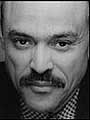
|  Lou Bellamy Lou Bellamy | | |
| |||
Lou Bellamy founded Penumbra Theater 26 years ago. He wants the company to continue on in good health without him once he retires. Last September Penumbra made harsh cuts in an attempt to balance the budget. It cut its summer education program and it's annual production of the Black Nativity. Now it's announced it will also postpone one of this season's shows to next year. It's a new play, and Bellamy says the company decided it was too much of a risk right now.
"One of the terrible things about finding yourself in financial difficulty is you begin to pull in your antenna - the tendency is to not experiment, to be safe. And nothing could spell the death knell for a theater any clearer than that kind of thinking," says Bellamy. Penumbra is not alone in making programming changes. The Jungle Theater is bringing back one of it's most successful productions in order to fill the seats.
It could be argued theaters outside the metro area have it even worse. Mary Jo Halowa is the only person on staff of the Troupe Theater, the oldest community theater in St. Cloud. Three years ago the Troupe and two other community theaters decided to make a bold move; to combine their resources and create a new, stronger organization. Halowa says they knew it was a gamble, but after a great deal of thought and planning they decided it was worth it.
|
"We're somewhere between survival mode and crawling along."
- Lucia Powlowski, Galumph Interactive Theater | |
"We made the leap and the leap failed," says Halowa. "Our opening production as a merged entity took place just after 9/11."
Two of the community theaters dissolved. Only the Troupe Theater survived. Halowa worked for several months as a volunteer, then was hired back at ten hours per week. Now she's at twenty hours per week. The job requires more time than that - which she puts in - but she says there just isn't the money to pay for it. Halowa says the company has tried to get support from local businesses but there's too much competition from social service agencies whose causes are seen as more important.
At Ramsey International Fine Arts Center in Minneapolis, children are learning about the Dakota conflict of 1862 by acting out the roles of settlers, indians and newly arrived immigrants. This week's lesson is taught by Galumph Interactive Theater. Galumph's staged productions give audience members parts to play and present them with situations they have to navigate as a team. Soon after it got off the ground 12 years ago the theater staff realized their techniques translated well to teaching problem solving skills, both to adults and children. Now their work is in high demand by metro area schools, but Managing Director Lucia Pawlowski says they don't have the funds to build their staff in order to serve the schools needs.
 | | ||
| |||
| Students at Ramsey International Fine Arts Center | | |
| |||
"I'd say we're somewhere in between survival mode and crawling along," says Powlowski. "That's the best way I know how to describe it."
When the recession obliged foundations to cut their funding, Galumph suddenly went from a growing organization to struggling to keep its doors open. The theater has just laid off its office manager, reducing the staff from four people to three. This means Managing Director Lucia Pawloski will be spending more of her time answering phones and less of her time writing grant proposals. It's a vicious cycle. Pawlowski says what worries her even more is how to maintain a high profile. Now when theaters need to build their audiences most, many are obliged to cut back the number of shows they produce in order to save money.
"At the very least we have to perform and that's a huge expense," says Powlowski. "So it's a visibility issue for us. We want people to know who we are we want to be present in the community."
Poor economic times have hurt theaters in the past. And in Darwinist terms, it's normal for the weaker organizations to die out during periods of environmental stress. Sheila Smith, Director of Minnesota Citizens for the Arts, admits those suffering most right now weren't financially strong to begin with. But, she says, that doesn't mean they're not worth fighting for.
"You may have weeded out the weakest financially but have you weeded out the weakest artistically?" asks Smith. "It's a different question. When the organizations fold, where are those people going? Where are those artists finding a place to work? Where's the artistic vision going? Maybe they'll move on to another organization and maybe they'll contribute somewhere else, but maybe they won't."
Smith says she's confident the economy will eventually bounce back enough so that the state legislature will reinstate its arts funding, and foundations will increase their giving once again. She says the question is when, and what will have been lost in the meantime.
|
News Headlines
| |
Related Subjects
|
 © 2026 | Home : Terms of Use : Your Privacy Rights


