





 |
|

It has been one month since Minnesota joined most other states to make drunk driving a felony offense. Since August 1, a fourth drunk driving arrest in a 10-year period is a felony. The charge carries up to seven years in prison. Before the new law, even the most notorious repeat offenders could not receive more than a gross misdemeanor and a year in county jail. The effects of the felony drunk driving law are just beginning to sink in, but many hope it is already starting to change attitudes and save lives.
 |
|
|
|
||
|
||
If you spend a lot of time at the bar, you know it without the numbers. Drunk driving happens. A lot.
Of current Minnesota residents, 387,000 have driven drunk and gotten caught. That's more than the population of Minneapolis. One-fifth of them have been caught three times or more.
Countless others have played the odds and made it home without a traffic stop, or worse.
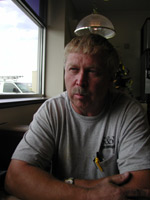
Stan Skaro is 53 years old and used to be a successful businessman. That changed on Sept. 28, 1990. Skaro had eight drinks over four hours at his hangout in Willmar. He thought he felt fine, but he knows he thought wrong.
"Basically I crossed the center line, and at the last minute I corrected to get back in my lane. But he was trying to avoid me, and so we hit right on the center line," Skaro says. "I was driving a one-ton, four-wheel drive four-door vehicle, he was driving a small Plymouth vehicle...We hit at approximately 55 miles an hour and he was killed instantly.
|
"They are sure they're doing nothing wrong...they're driving fine, the police are picking on them."
- Stan Skaro | |
"His wife doesn't have a husband any more. His son doesn't have a father any more. Because I killed him. He's gone," Skaro says.
Skaro did seven months in Stillwater state prison for vehicular homicide, and nine months in a halfway house. He was midway through his prison term before he realized this was more than a case of bad luck, or even bad decision-making. He sees the same defiant look in the eyes of most other drunk drivers he speaks to.
"They are sure they are doing nothing wrong," Skaro says. "They've been doing this for five, 10, 20 years...they're driving fine, the police are picking on them."
On a recent evening near St. Cloud, late-night mosquitoes are savaging State Trooper Paul VanVoorhis and a young woman doing her best to walk a straight line.
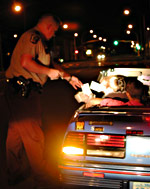
Lt. VanVoorhis was checking for speeders coming over a St. Cloud bridge. He set up orange cones behind his cruiser. No sooner had he returned to his seat than a car drove up from behind and plowed through the cones. The driver's open window let out a whiff of alcohol. She had young kids in the back seat.
| |
|
|
|
||
|
||
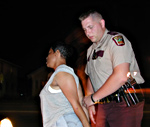
VanVoorhis runs his series of field sobriety tests, but after the first one the rest are largely a formality. He asks her to put her hands behind her back, snaps on the handcuffs, and leads her to the back of his cruiser.
VanVoorhis says late at night, one in 10 drivers on the road is legally drunk. The secret to catching them is quantity - stop as many cars as possible for speeding or broken headlights, and then see what you find. But sometimes, like this woman, the drivers come to them.
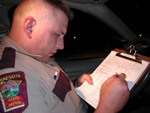
"I guess I've taken a specialty toward impaired driving," VanVoorhis says. "I like to arrest the impaired driver. I like to go out there and focus my shifts on the impaired driver. It's one of the things within the State Patrol I've been fortunate enough to be able to do."
There's a certain rough pattern to the arrests. Intoxicated drivers will often start out friendly, or plaintive, under the illusion this is still an offense you can walk away from. The woman in the back of the squad car pleads with the officer to just leave her with her ticket and let her walk home.
"I know you can do that," she says. "It happens all the time."
| |
|
|
|
||
|
||
It doesn't. VanVoorhis says every DWI needs to be booked at the county jail. Attitudes change after the cruiser door is shut, and this fact sinks in. This woman is not happy to learn she's headed to Foley, some 20 miles away. She begins to rant from the back seat.
"It's just not what it used to be. In this case, this gal thinks she should just get a ticket and go home. That's just not the way the game is played any more," says VanVoorhis. "Society has deemed that impaired driving costs the taxpayers of Minnesota - and the nation - millions upon billions of dollars."
Impaired driving cost $300 million last year in Minnesota, according to the Department of Public Safety. It also led to 211 deaths, and more than 4,000 people injured.
Bonnie Labatt, executive director of Mothers Against Drunk Driving in Minnesota, is glad the state finally made drunk driving a felony. But she says it's no quick fix.
"We feel that giving someone four chances to drink, drive, operate a vehicle while impaired, and theoretically run you down and kill you, is a bit much," Labatt says.
| |
|
|
|
||
|
||
The number of drunk driving arrests went down last year for the first time since 1994. But arrests of young adults were up, and the total number was still higher than a decade ago.
"Our statistics have been stalled. We are not making the inroads we had hoped as an organization," Labatt says. "There's complacency involved, of course (there's) speed, a lot of teenagers driving."
In the Stearns County jail, the sheriff guesses 20 percent of the inmates are there on drunk driving charges. The county just charged its first felony drunk driver. Corrections officer Brad Gorder says there's talk around the jail about the new law.
"The talk that you might hear...is more complaining about it," Gorder says. "But you hear, 'Well, they're not going to find me doing that again.' Whether they stick to their word or not is another thing."
One person who hopes they stick to their word is Jim Case, whose 14-year-old daughter Lisa and her friend Daniel were both killed in 1994 by a drunk driver.
| |
|
|
|
||
|
||
His daughter and her friend were rollerblading in rural St. Joseph. A drunk 20-year-old took his car off the road and into the children. Both died at the scene. Case has since become the vice president of MADD in Stearns County.
"This law is a big wake-up message. Before, if you were caught, you were looking at a year in county jail with work-release," Case says. "Now we're talking about a felony. You can lose your right to vote, never own a firearm. (For) a lot of job opportunities, that door closes for you if you're a convicted felon."
Along with Daniel's father, Case has relived his story hundreds of times for audiences around the state. He can tell when they're making an impression, and when they're not.
"I believe younger kids, they do listen...and that's why I prefer to speak to the youth," says Case. "Some of the older drivers that are picked up, they're required to go to MADD impact panels. And I spoke at a few of those, and I don't enjoy them because the feel I get from the audience at those kind of impact panels is, 'Yes, I'm court-ordered to be here so go on and say what you need to say, because I've got better things to do.'"
Case has a soft disposition that hides his deep determination. He wants to win their empathy. But if it takes a felony and a long jail term, so be it, and good riddance. If last year's trends continue, this year 1,400 repeat drunk drivers will find themselves in prison under the new law.
More from MPR © 2026 | Home : Terms of Use : Your Privacy Rights