





 |
|

Drunk driving incidents decreased last year in Minnesota, but are still higher than a decade ago. Arrests among young adults have increased during that time. So has the proportion of drunk drivers in outstate Minnesota. Stemming drunk driving in rural areas means dealing with special challenges and different attitudes.
 |
|
|
|
||
|
||
It might seem common sense to think drunk driving is less dangerous where there's less traffic.
Jim Case lost his 14-year-old daughter Lisa, along with her friend Daniel, in 1994. He'll tell you even on the open road, with the sun in the sky, there's no place safe.
"It was a rural, country road. They were on the side of the road, rollerblading, and they had actually stopped and Daniel was adjusting one of his rollerblades and a young man who'd been drinking in a bar all day ... drifted off to the side and struck both of the kids, and killed them both instantly."
Case now travels with Daniel's father to various parts of the state to tell their story.
"What I hear from the smaller rural communities is that there's a lot of drinking that goes on out in the country," he says. "In the smaller towns around the St. Cloud area. In fact we've had phone calls, 'Come on down,' Olivia was one of them in the southern part of the state, where they had a big drinking problem."
Conventional wisdom might suggest that drunk driving is less risky in the country. It's just not true. Rural roads can be thin and curved. Drivers often travel farther distances, and there are no cabs to be had. There are still other cars and pedestrians to hit, but there are also trees and ditches; 70 percent of last year's drunk driving deaths were the drunk drivers themselves. Emergency response time is also typically slower in rural areas.
| |
|
|
|
||
|
||
No numbers specifically chart rural drinking and driving, but a few give some indication. In 1990, 44 percent of DWIs happened outside the seven-county metro area. By the year 2000, the outstate figure increased to 52 percent, even though just 46 percent of the state's residents live outside the metro. The change may be partly due to increased outstate enforcement and more people getting caught, and that's a good thing. But especially in rural areas, those who get caught tell just a small part of the story.
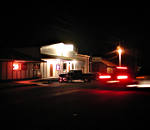
Near midnight on a Friday, outside a small-town bar in Morrison County where the air smells like the dairies up the road, a 30-year-old man wanders out with some friends. A man we'll call John has thin beard and a beer in one-hand. He's been drinking, and talks candidly as long as I don't pinpoint his town or his favorite bar.
Out here you can get away with things you can't in the big city. This spot is a convenient hang-out place from his home up the road.
|
"I can go to Little Falls, I can have three or four beers...drive home, not a problem."
- "John," Morrison Co. resident | |
"(I live) seven miles away from here, eight miles, came up here and had a hamburger, fries, couple beers. Not a problem," he says. "I can go to Little Falls, I can have three or four beers in Little Falls, shop in Wal-Mart, drive home, not a problem. (In) St. Cloud, I don't even want to drink a cup of coffee, because I'm gonna wind up getting in trouble for a cup of coffee, I'm sure of it."
Attitudes are different here. Most small towns don't have their own police. Sheriff's deputies sometimes make a catch, but where towns are few and far apart your chances look pretty good.
John makes the argument that small towns are safer, because people look out for one another. "(If) someone's had too much to drink in there, before he walks out, (suppose) he's a neighbor. Hey, we'll get you home. We'll get you home safe. Because we don't want someone with a DWI on their shoulders. We will take care of them ... Local people, you'll take care of each other (so nobody's driving) totally drunk."
For John and his friends somewhere between legally drunk and totally drunk is where you stop yourself and others from driving. They define legally drunk as someplace they get to after two beers. In other words, not much.
Not surprisingly, John's logic is a little inconsistent. He'll ignore the legal limit, but that doesn't mean a disrespect for authority or for the consequences of his actions. If he's really drunk, bring on the sheriff to protect him from himself.
"If I can't drive, (and) maybe I think I can drive, (but) if he thinks I can't, he can arrest me any time he wants to. Because you know, I don't want to kill some family out there," John says.
Many who've spent a night at the bar, city or country, think they're safe to drive home. The difference out here is that the odds of escaping notice are much better, and people know it.
| |
|
|
|
||
|
||
Stearns County is one of the state's larger counties, much of it dotted with small towns. The county got its first felony drunk driver on a recent weekend, weaving dangerously on a rural road. But on a typical Friday or Saturday night, Sheriff Jim Kostreba says five deputies patrol the county's 2,500 miles of roadway. The vast majority of their time is spent responding to domestic violence and other calls.
"We have squad cars scattered throughout the county, but we have so many miles of road out in the county to patrol and there just aren't enough officers to be patrolling the roads at peak times when you're looking for intoxicated drivers," Kostreba says. "So I'm sure many of them get through."
A bartender in a typical two-bar Stearns County town, Holdingford, says the city gave up its police officer in 1997, and there's no guarantee a sheriff's deputy will even make a pass through town on a weekend.
So bartenders are usually the last line of defense, and it's admittedly a thin line. Return to our first Morrison County bar, this time on a weekday afternoon. Three area bartenders are meeting for a drink, and they agree to chat anonymously about drunk driving out here. Like many rural bartenders they are young, in their early 20s.
"It's their choice whether they want to drink or drive or not, that's what I think. Because they're going to do what they want no matter what," says one. "You can try to chase them down but ..."
"Either that, or they can go buy a case of beer and get drunk on their own," adds another woman who used to tend bar in this area and now works in St. Cloud.
"Once they leave here they've got back-up in their vehicle," says the first.
"You can't always pull their keys because they're not always going to give you their keys," says a young man who has tended bar nearby. "They're going to have a big fit, they're going to start a big fight ... and you can't call a cab out here. What's a person to do? You can't keep anybody safe. I mean, they're responsible for their own actions."
And bartenders, they say, get paid to serve drinks. There is pressure from bar owners to give customers what they want, and it's tough to cut off customers you know.
What's more, rural bartenders often work alone. They clearly feel understaffed when it comes to watching for intoxicated patrons.
"If we're in the back room, people leave, they come and go," says the first woman bartender. "There's no way (we can keep up with them). And you can't follow them outside because you've got people to wait on."
The woman who now works in St. Cloud adds, "there's no bouncer at the door, nothing. Whereas in a big city like St. Cloud you've got three bouncers at the door, three people behind the bar."
Bartenders and patrons say people change their habits when they get caught. Drunk driving activists find that attitude distressing. Stan Skaro is one of them.
"I think in the rural areas they really do think they can get away with it, that the police aren't going to pick them up," he says. "And they're in the thought pattern that they aren't doing anything wrong."
Skaro should know. He learned his lesson one night in 1990, in rural Kandiyohi county. He killed a man when his car crossed the center line. Skaro points out there's still no DWI on his record; instead, vehicular homicide.
More from MPR © 2026 | Home : Terms of Use : Your Privacy Rights